Walk through any manufacturing plant, oil depot, or warehouse and you’ll usually find a red cylinder mounted near the exit, half-forgotten until the day it’s needed. That cylinder is doing a lot of quiet, unglamorous work. Industrial fires don’t announce themselves — a frayed wire, a spark near a solvent drum, a hot bearing on a conveyor belt — and by the time someone notices, there’s often only a narrow window to act. That’s the gap Dry Chemical Powder fills.
It’s been around for decades, and honestly, nothing has really replaced it for general industrial use. No batteries, no plumbing, no warm-up time. You pull the pin, you aim, it works. This piece walks through what the powder actually is, how it puts out a fire, where different industries rely on it, and what to actually look for before you buy a batch — because not all powder performs the same way once it’s out of the drum.
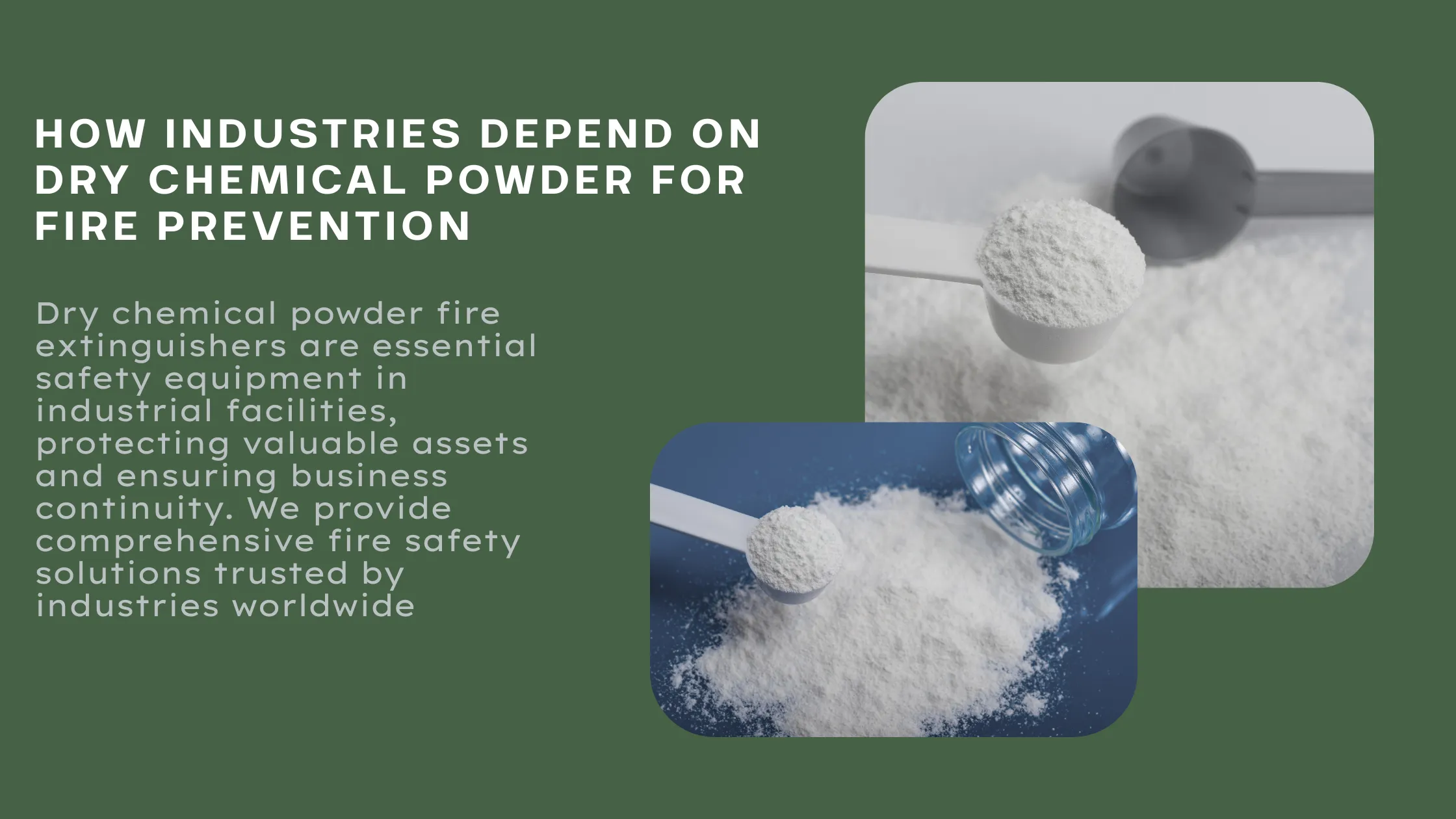
At its core, Dry Chemical Powder is a finely ground mineral-based compound — most commonly built around mono-ammonium phosphate or sodium bicarbonate — designed to smother flame rather than douse it. It’s manufactured specifically to be non-conductive and resistant to clumping from moisture, so it can sit in storage for years and still discharge cleanly when the valve opens.
That’s really the difference between this and a regular industrial chemical. Most chemicals are made to do something — clean, bond, react. This one is made to stop something. It doesn’t dissolve, it doesn’t require mixing, and unlike a lot of fire suppression alternatives, it won’t fry your electrical panel or ruin machinery the way a soaked-through water hose might.
Every fire needs three things to keep burning — heat, fuel, and oxygen. Take one away and it goes out. That’s the basic fire triangle, and it’s the whole logic behind how this powder works.
When it’s discharged, the powder blankets the burning surface and physically cuts off its oxygen supply. At the same time, it interferes with the chemical chain reaction that’s actually sustaining the flame — which sounds technical, but in practice just means the fire loses its ability to keep feeding itself. Some grades also pull heat away from the surface as they settle. Put it together and you get a suppression method that can knock a fire down in a matter of seconds, not minutes.
This is part of why Fire Extinguisher Dry Chemical Powder is the default choice in so many facilities — when a fire starts near a machine or a pallet of stock, seconds matter more than anything else.
This is the one most plants keep stocked, and there’s a simple reason for it. ABC Dry Chemical Powder covers Class A fires (paper, wood, packaging), Class B fires (fuels, solvents, flammable liquids), and Class C fires (electrical equipment) — all in one extinguisher. When you can’t predict exactly what’s going to catch fire on a given day, having one product that handles most scenarios is worth a lot.
BC-grade is more targeted — built for flammable liquids and electrical fires specifically. You’ll see it a lot in fuel depots, transformer rooms, and kitchens, where the fire risk is fairly predictable and doesn’t really involve solid combustibles.
Then there are the edge cases. Metal processing units, for instance, deal with combustible metal fires (Class D) that standard ABC or BC powder simply can’t handle. These specialized powders aren’t common, but where they’re needed, nothing else will do the job properly.
It’s a bit surprising how many different sectors end up relying on the same product, just for different reasons:
The industries are different, but the underlying problem is the same: something needs to stop a fire fast, without special training, before it gets out of hand.
Beyond the extinguisher on the wall, this powder ends up built into several layers of a facility’s fire safety plan — portable units on the floor, fixed suppression systems in high-risk zones, safety kits near flammable storage, emergency response gear for maintenance crews, and hazardous material storage areas where a delayed response isn’t an option.
That range of use is exactly why Industrial Fire Safety Powder shows up so consistently on compliance checklists and safety audits, regardless of the industry doing the auditing.
Talk to almost any safety officer and ask why they keep ABC powder stocked over other options, and you’ll get roughly the same answer every time. It covers multiple fire classes, so nobody has to stop and think about which extinguisher to grab in a panic. It’s safe around live electrical equipment, which matters in a plant full of wiring and control panels. It acts within seconds of discharge, it stores easily without needing special conditions, and it’s cheaper over time than juggling several fire-class-specific agents. For facilities dealing with mixed hazards and tight budgets, it’s usually just the more practical call.
In practical terms, a dry powder fire extinguisher used in an industrial setting typically covers:
Here’s the thing about fire suppression equipment — you don’t find out if it’s good until the one moment you actually need it, and by then it’s too late to swap suppliers. So the checking has to happen upfront: purity of the chemical composition, flowability under pressure, resistance to moisture, consistent particle size, and steady quality control from batch to batch. Certifications from recognized safety bodies help too, since they’re one of the few ways to verify quality before an emergency puts it to the test.
At Sigma Minerals India, every batch goes through internal testing before it ships out, so buyers aren’t left hoping the powder performs — they can actually check it did.
Worth clearing up a common mix-up here: buying Dry Chemical Powder and getting a full suppression system installed are two separate jobs, done by two different kinds of companies.
Extinguishers and suppression equipment should come from certified suppliers, and the actual installation needs to be handled by qualified fire safety firms who know the local codes and understand the layout of your facility. Sigma Minerals India’s role is on the supply side — producing high-quality Dry Chemical Powder that goes into these systems — while the design, installation, and servicing of complete fire protection setups is genuinely better left to specialized fire safety companies. Keeping that line clear just means you’re working with the right people for each part of the job.
A few things worth checking before you place an order:
None of this takes long, and it’s a lot easier to sort out now than during an actual emergency.
There’s nothing flashy about Dry Chemical Powder. It doesn’t come with an app or a dashboard. But it’s still one of the most reliable tools an industrial facility has for stopping a fire before it turns into something far worse. It works fast, covers multiple fire types, and — if it’s stored properly — holds up for years without losing its edge. For plants where downtime or equipment loss is always sitting somewhere on the risk list, sourcing high-quality powder from a manufacturer you actually trust isn’t a nice-to-have. It’s just part of running the place responsibly.
If your facility needs industrial-grade Dry Chemical Powder that’s been tested before it ever leaves the plant, get in touch with Sigma Minerals India and talk through what your operation actually needs
Dry Chemical Powder is a fire-suppressing agent used in fire extinguishers to control Class A, B, and C fires. It quickly interrupts the combustion process, making it one of the most effective and widely used fire protection materials in industrial and commercial settings.
Dry Chemical Powder suppresses fire by forming a protective barrier over the fuel and interrupting the chemical chain reaction that sustains combustion. It works rapidly on multiple fire classes, helping reduce damage and improve emergency response.
Dry Chemical Fire Extinguishers release a fine powder under pressure that covers the burning material, blocks oxygen, and disrupts the fire's chemical reaction. This combination extinguishes flames quickly and helps prevent re-ignition.
Dry Chemical Powder is widely used in manufacturing, oil and gas, chemical processing, warehouses, mining, power plants, logistics, automotive facilities, and electrical industries where fire risks are higher and fast suppression is essential.
ABC Dry Chemical Powder and BC Dry Chemical Powder are both suitable for electrical fires because they are non-conductive. ABC powder also provides protection against Class A fires, making it a more versatile option for industrial use.
Store Dry Chemical Powder in sealed containers in a cool, dry environment away from moisture and direct sunlight. Regular inspections help prevent clumping and ensure the powder remains free-flowing and effective during emergencies.
The most common types include ABC Dry Chemical Powder, BC Dry Chemical Powder, and specialty powders for metal fires. Each type is formulated to combat specific fire classes and industrial applications.
Dry Chemical Fire Extinguishers release a fine powder under pressure that covers the burning material, blocks oxygen, and disrupts the fire's chemical reaction. This combination extinguishes flames quickly and helps prevent re-ignition.