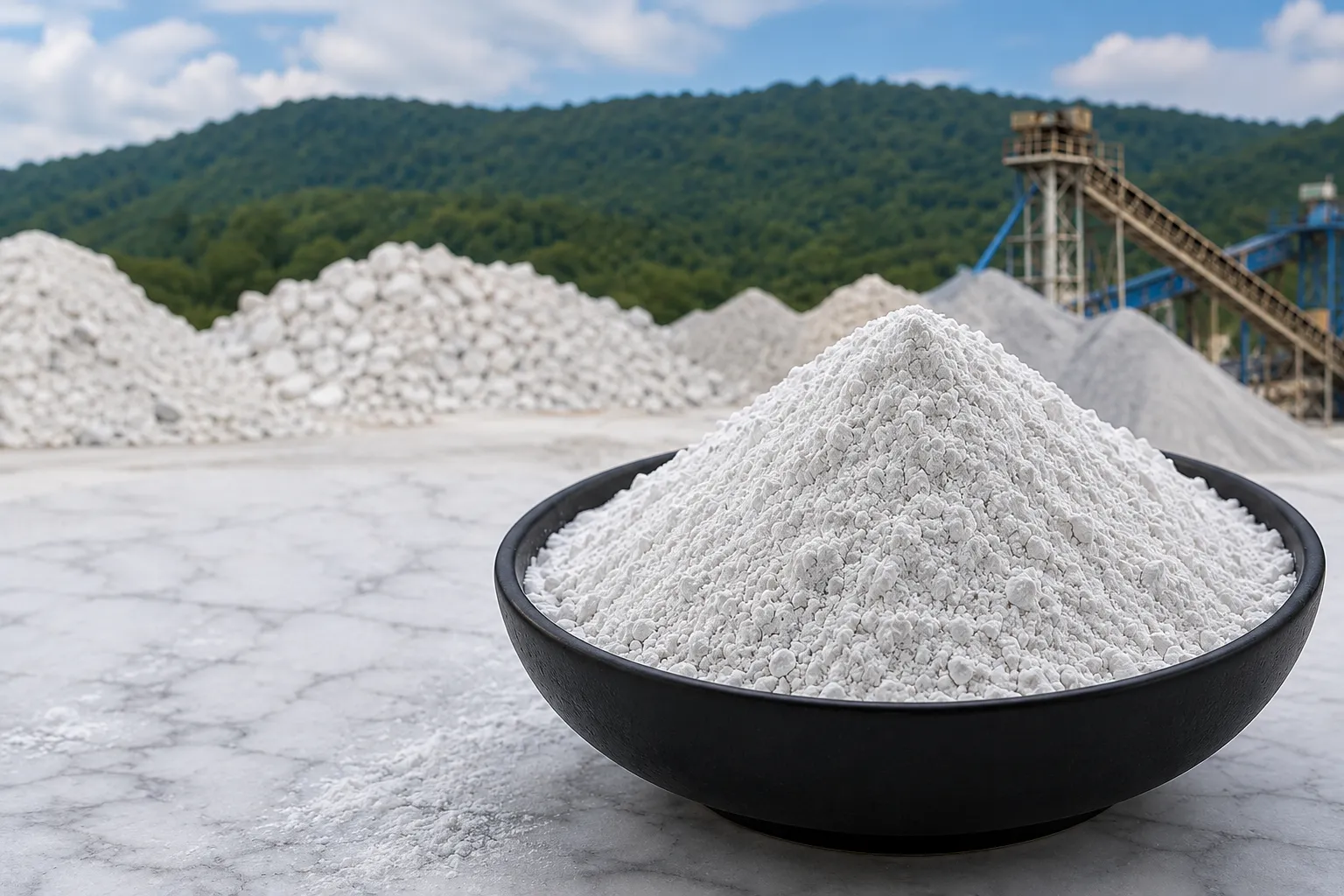
PCC powder is a straightforward material in some ways — it’s a white mineral powder used in large quantities across several industries. But the way it performs in those industries is anything but simple.
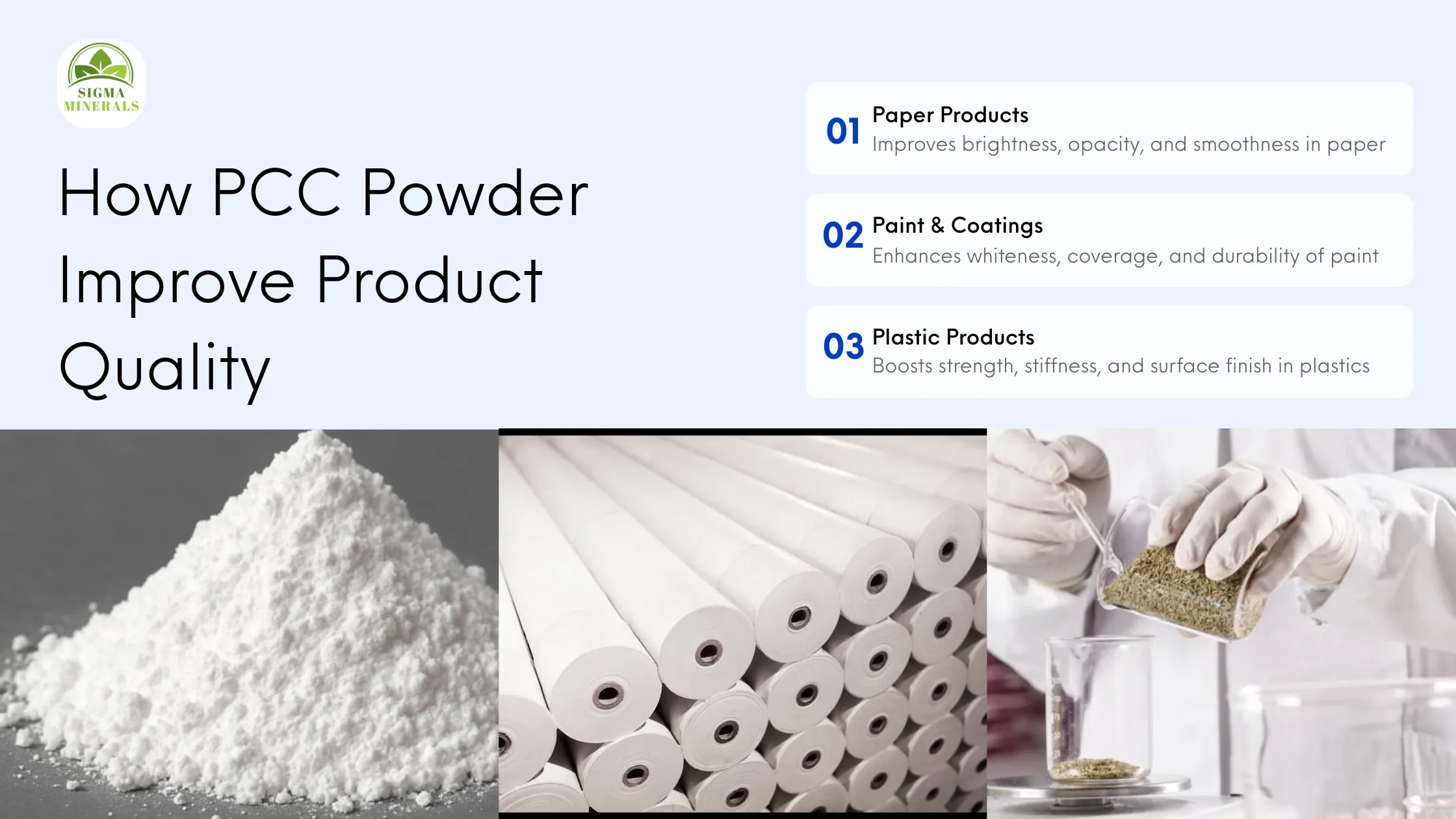
In paper, it’s improving how the sheet looks, feels, and prints. In paint, it’s contributing to coverage, durability, and finish consistency. In plastic, it’s strengthening the material, improving surfaces, and making production more cost-effective.
None of these benefits happen automatically. They come from using the right grade of PCC, sourced from a reliable PCC manufacturer who takes quality seriously, applied by production teams who understand how to get the best from the material.
If you’re currently sourcing PCC powder or evaluating new suppliers, focus less on price per tonne as the first filter and more on the quality specifications and the supplier’s ability to deliver those specifications consistently over time. Choosing the right PCC Powder manufacturer ensures better performance, consistent quality, and long-term value.
That’s where the real value — and the real cost saving — actually comes from.
Most people don’t think about what goes into making a sheet of paper feel smooth, or why some paints cover a wall perfectly in one coat while others need three. And honestly, why would they? These things just work — or at least, they’re supposed to. But if you work in manufacturing, procurement, or product development, understanding why they work is actually important. Because when something goes wrong — paper that looks dull, paint that peels too soon, plastic that warps after moulding — the answer often comes back to the raw materials used in production.
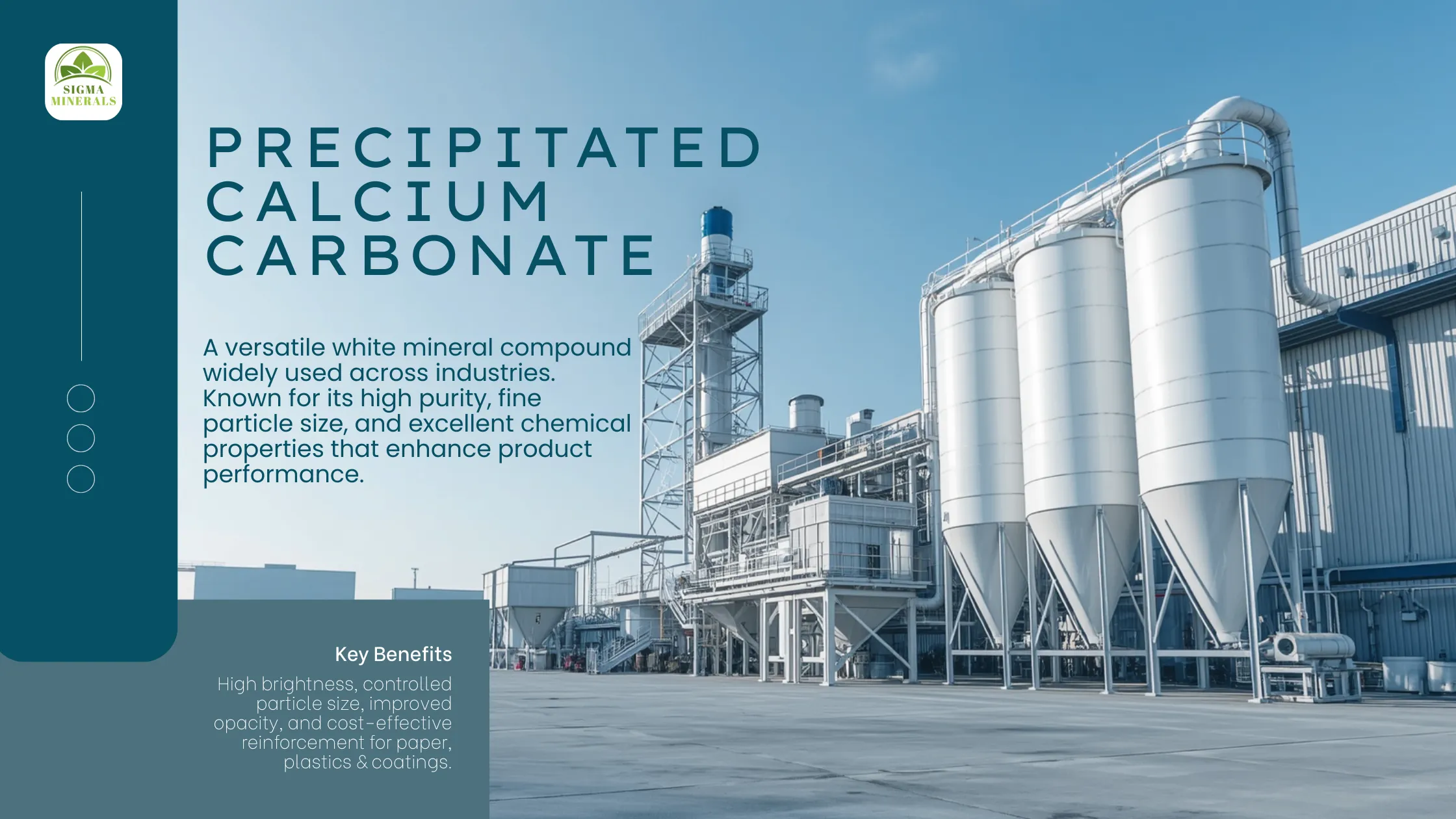
One raw material that quietly influences quality across all three of these industries is Precipitated Calcium Carbonate powder, commonly called PCC powder. PCC powder improves product performance by enhancing smoothness, brightness, strength, durability, and overall quality. It doesn’t have a flashy reputation, but people who work with it regularly know how much difference it makes.
Let me walk you through what it actually does — in plain language, without the technical jargon.
What Exactly Is PCC Powder?
Before jumping into applications, it’s worth taking a moment to understand what PCC is — because it often gets confused with regular calcium carbonate.
Both come from the same source material — limestone. But that’s where the similarity ends.
Regular ground calcium carbonate (GCC) is basically crushed and processed rock. It works fine for many purposes, but you don’t have much control over its properties. What you dig up is largely what you get.
PCC is different. It’s made through a chemical process — limestone is heated, converted to calcium oxide, then carefully reacted with water and carbon dioxide. This controlled process allows manufacturers to engineer exactly the kind of powder they need: specific particle size, specific shape, specific whiteness level.
That ability to control the end properties is what makes PCC genuinely useful in precision manufacturing. You’re not just adding a filler — you’re adding a material that’s been designed to behave in a particular way.
What PCC Does for Paper — and Why It Matters
The paper industry uses enormous quantities of PCC, and once you understand what it contributes, that makes complete sense.
It Changes How Paper Looks
Brightness matters more than most people realise. When you’re reading a book or looking at a printed brochure, the contrast between the paper and the ink is what makes text sharp and images clear. PCC has high natural whiteness, and when it’s blended into paper during production, it makes the sheet noticeably brighter.
This isn’t just cosmetic. For publishing, printing, and packaging companies, paper brightness is a measurable specification that affects the final product’s quality. Dull paper makes everything printed on it look worse.
It Smooths Out the Surface
Run your finger across a piece of low-quality paper and you can feel the roughness. That texture causes problems during printing — ink doesn’t sit evenly, fine details get lost, and the overall print quality suffers.
PCC particles are fine and uniform. When they’re incorporated into the paper structure, they help fill in surface irregularities and create a smoother sheet. Better surface means better print. It’s as straightforward as that.
It Stops Text From Showing Through
If you’ve ever printed on both sides of a thin sheet and had the text bleed through, you’ve experienced low opacity. It’s annoying, and it makes documents look unprofessional.
PCC improves opacity — the paper’s ability to block light. That’s why books, magazines, and office documents use paper grades that contain significant amounts of PCC. You can print on both sides cleanly, which is exactly what you need in most professional applications.
It’s Used as a Surface Coating Too
PCC isn’t just mixed into the paper body — it’s also applied to the surface as a coating. This coating is what gives glossy or matte-finished paper its distinctive look and feel. Brochures, product catalogues, and premium packaging almost always use coated papers, and PCC is central to achieving those finishes.
It Helps Paper Manufacturers Manage Costs
Wood pulp is the main raw material in paper, and it’s expensive. By partially replacing pulp with PCC, manufacturers can reduce their material costs without reducing paper quality. In many cases, the paper actually performs better with the right amount of PCC added. It’s one of the few situations where using less of something expensive improves the product — because the replacement material is genuinely functional, not just cheap filler.
What PCC Does for Paint — and Why It Matters
Paint is a product where consumers have strong opinions. Everyone has experienced paint that didn’t cover well, dried with brush marks, or started peeling within a couple of years. Those failures often trace back to the formulation — including the mineral ingredients inside the tin.
It Makes Paint Cover Better
Hiding power — the ability to cover whatever is underneath — is one of the most important qualities in paint. PCC acts as what’s called an extender pigment. It helps the paint spread more evenly and cover more surface area from the same amount of product.
Good coverage means fewer coats, which means less time and less paint used. For professional painters working on large projects, that efficiency has a real commercial value.
It Gives a Smoother Finish
Streaks and roller marks are the enemy of a good paint job. PCC’s fine particles improve how paint flows when it’s being applied, helping it level out naturally into a uniform coat. The result is a cleaner, smoother finish with less effort.
This is relevant whether you’re applying with a brush, roller, or spray — the underlying flow characteristics of the paint affect the result in all three methods.
It Makes Paint Last Longer
Durability is where PCC earns its place in exterior and high-performance paints. The mineral adds physical stability to the dried paint film, helping it resist the things that cause paint to fail — cracking, peeling, chalking, and wear from weather or contact.
A paint that lasts longer means less frequent repainting, which is a significant cost saving for property owners and a quality statement for the paint manufacturer. Nobody wants to repaint a building every two years.
It Keeps Colours True Over Time
Colour shift is a common complaint with lower-quality paints. Whites go yellow, colours fade unevenly, and the final result looks nothing like it did when first applied. Because PCC is chemically stable and highly pure, it doesn’t react with other ingredients in the paint. It doesn’t change colour itself, and it doesn’t trigger reactions that affect other pigments.
For both decorative and industrial coatings, this colour stability matters enormously — especially in applications where colour accuracy is a requirement, not just a preference.
It Helps Get the Thickness Right
Paint viscosity — how thick or thin the product is — affects everything from how it applies to how it looks once dry. PCC helps formulators hit the right viscosity range for each specific paint type, and it helps maintain consistency across production batches.
When a paint manufacturer is producing thousands of litres of the same product, batch-to-batch consistency isn’t optional. PCC contributes to that predictability.
What PCC Does for Plastics — and Why It Matters
Plastic manufacturing is an area where the role of mineral fillers is often misunderstood. People assume adding a filler means weakening the material. With PCC, the opposite is often true — when it’s used correctly and at the right grade.
It Actually Makes Plastic Stronger
When PCC is blended into plastic compounds before moulding or extrusion, it acts as a reinforcing filler. It improves rigidity and impact resistance. Plastic products made with well-graded PCC are harder to bend, crack, or damage under normal use conditions.
This strengthening effect is why PCC is used in applications like pipes, panels, rigid packaging, and structural plastic components — places where mechanical performance genuinely matters.
It Improves How the Surface Looks and Feels
Surface finish in plastic products affects consumer perception and functional requirements. A smooth, even surface looks better, feels better in the hand, and is easier to apply labels, coatings, or printing to.
PCC’s fine particle structure contributes to a cleaner surface on finished plastic items. For consumer goods especially, this is the kind of detail that separates a product that feels premium from one that feels cheap.
It Reduces the Cost of Production Without Cutting Corners
Plastic resins — the base polymers used to make plastic products — are expensive raw materials. By using PCC as a partial replacement, manufacturers can reduce how much resin they need per unit of product.
The key word here is partial. This isn’t about loading plastic with cheap filler and hoping nobody notices. It’s about replacing a precise proportion of resin with a functional mineral that maintains or improves product performance. Done properly with high-quality PCC, the product is just as good — sometimes better — at a lower material cost.
It Makes the Manufacturing Process Easier
During moulding and extrusion, plastic compounds need to flow smoothly through machinery. PCC improves these flow characteristics, making the process more efficient. Machines run more smoothly, cycle times can be reduced, and equipment wear decreases over time.
These might sound like minor operational details, but across a high-volume production facility running continuously, they add up to meaningful savings.
It Stops Products From Warping
Warping and shrinkage during cooling is a genuine problem in plastic manufacturing. When plastic solidifies unevenly, products come out bent, twisted, or out of specification. PCC improves dimensional stability — meaning the plastic holds its intended shape as it cools.
For precision components, this is non-negotiable. A part that warps during production is a part that fails quality control and gets scrapped.
The Part That Often Gets Overlooked — PCC Quality Itself
Here’s something that doesn’t always get mentioned clearly enough: the benefits above depend entirely on using good PCC powder.
Low-quality PCC — inconsistent particle size, poor whiteness, trace impurities, and high moisture content — doesn’t deliver the same results. In fact, poor-quality PCC can actively cause problems. Uneven particles create inconsistent results in paper and plastic applications. Impurities can interfere with paint chemistry, while excess moisture can cause processing issues across all three industries.
Choosing a reliable PCC manufacturer helps ensure consistent particle size, superior whiteness, controlled moisture levels, and high-purity Precipitated Calcium Carbonate Powder. A trusted PCC manufacturer provides quality-tested material that supports better performance, smoother production, and improved final product quality.
Particle size distribution — Is it consistent across the batch? Inconsistency here flows through to inconsistency in your product.
Whiteness — Especially for paper and paint applications, this is a hard specification, not a soft preference.
Purity level — What percentage of the powder is actually calcium carbonate, and what else is present?
Dispersibility — Does it blend smoothly, or does it clump and require excessive processing to incorporate?
Moisture content — Is it controlled and within acceptable limits for your specific application?
These aren’t difficult questions to ask a supplier. A manufacturer who is serious about quality will have clear, documented answers to all of them — because they’re testing for these things at every stage of production.
Putting It All Together
PCC powder is a straightforward material in some ways — it’s a white mineral powder used in large quantities across several industries. But the way it performs in those industries is anything but simple.
In paper, it’s improving how the sheet looks, feels, and prints. In paint, it’s contributing to coverage, durability, and finish consistency. In plastic, it’s strengthening the material, improving surfaces, and making production more cost-effective.
None of these benefits happen automatically. They come from using the right grade of PCC, sourced from a reliable PCC manufacturer who takes quality seriously, applied by production teams who understand how to get the best from the material.
If you’re currently sourcing PCC powder or evaluating new suppliers, focus less on price per tonne as the first filter and more on the quality specifications and the supplier’s ability to deliver those specifications consistently over time. Choosing the right PCC manufacturer ensures better performance, consistent quality, and long-term value.
That’s where the real value — and the real cost saving — actually comes from.