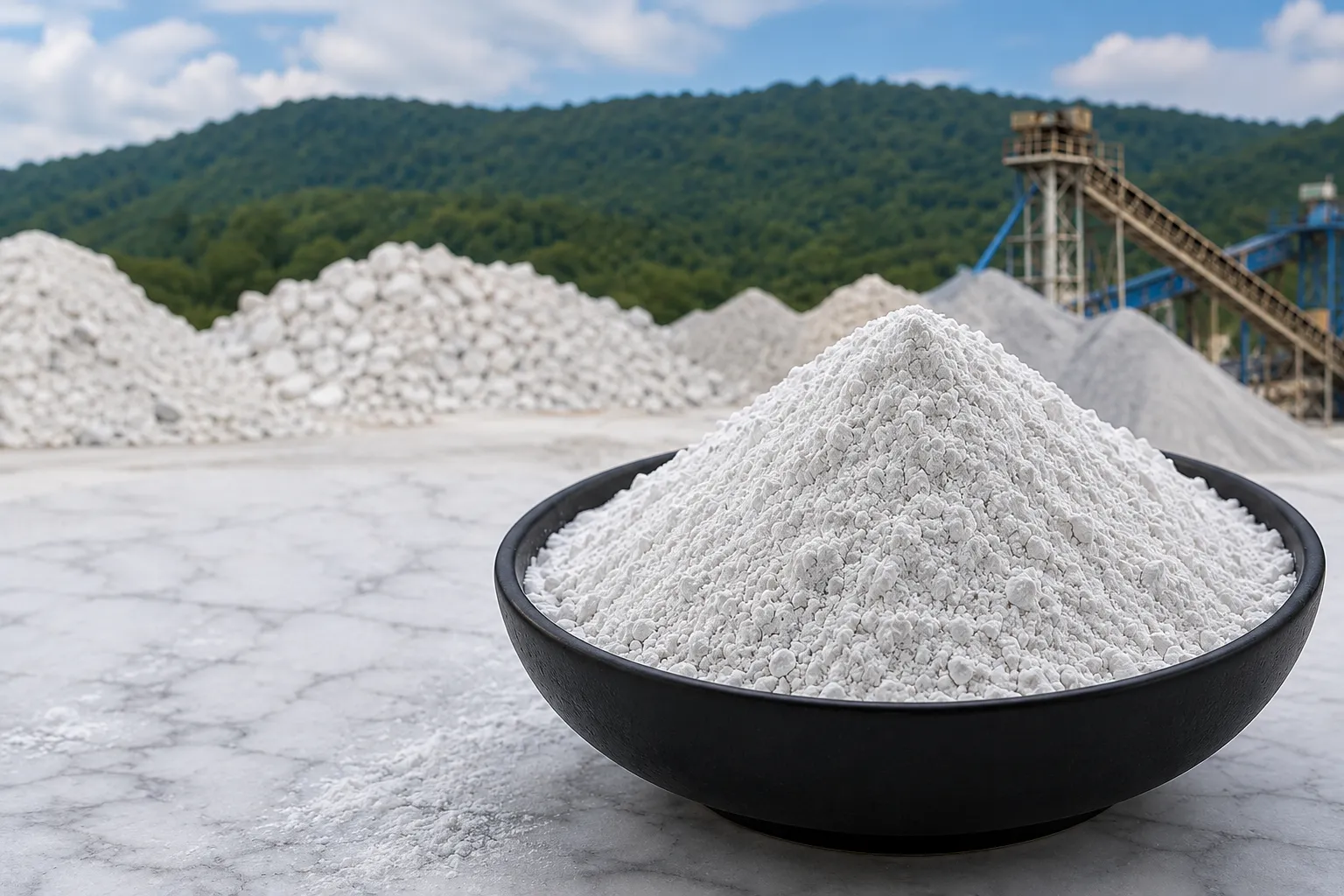

If you’ve ever driven on a highway at night and noticed how the lane markings glow back at you under your headlights, you’ve seen glass beads at work. These tiny spheres are mixed into road paint or dropped onto it while it’s still wet, and they’re the reason painted lines stay visible after dark. Beyond roads, the same beads (or close variants of them) show up in sandblasting cabinets, shot peening lines, and surface finishing operations across the country.
Demand for glass beads has grown steadily as highway projects expand and manufacturers pay closer attention to surface preparation quality. But not every glass beads manufacturer in India produces beads to the same standard, and buyers who don’t know what to check often end up with inconsistent batches, poor reflectivity, or beads that break down faster than they should. This guide walks through what glass beads actually are, how they’re made, and what separates a manufacturer worth working with from one that just looks good on paper.
What Are Glass Beads and Why Are They Important?
What Are Glass Beads?
Glass beads are small, spherical particles made primarily from soda lime glass — the same base material used in bottles and window glass, just processed differently. Manufacturers melt raw silica sand along with soda ash and limestone, then shape the molten glass into round particles rather than flat sheets. The spherical shape isn’t cosmetic; it’s what gives the beads their optical and mechanical properties. A perfectly round bead bends light in a predictable way, which is exactly what road marking depends on.
Depending on the intended use, these microspheres can be solid or occasionally have a slightly different internal structure, but the vast majority used commercially are solid soda lime glass beads.
Major Industrial Applications
Glass beads show up in more places than most people realize:
- Road marking — mixed into or dropped onto traffic paint for retro-reflection
- Highway safety — used on centerlines, edge lines, and pedestrian crossings
- Airport runways — for marking taxiways and runway edges under low-light conditions
- Sandblasting and surface preparation — as a gentler alternative to angular abrasives
- Shot peening — to relieve stress in metal components without damaging the surface
- Reflective paint formulations — for signage and safety equipment
- Construction — in certain flooring and coating applications where texture control matters
Reflective road marking materials and highway safety glass beads are really the same product family, just described from different angles of use — one from the chemistry side, one from the application side.
How Beads Are Made in Factory
Understanding the manufacturing process helps explain why quality varies so much between suppliers. It’s not a one-step operation.
Step 1 – Raw Material Selection
The batch starts with silica sand, soda ash, limestone, and often a portion of recycled glass (cullet). The ratio and purity of these inputs directly affect clarity and consistency. Sand with too much iron content, for instance, will tint the glass and reduce light transmission — a subtle defect that only shows up once the beads are tested for reflectivity.
Step 2 – High Temperature Melting
The raw mix is melted in a furnace at temperatures typically in the range of 1,400–1,500°C. This step has to be tightly controlled; uneven heating leaves streaks or bubbles in the glass, which later becomes weak points in the finished bead.
Step 3 – Bead Formation Process
Molten glass is fed through a process that shapes it into droplets, which then form spheres as they fall and cool — surface tension does most of the work here, pulling the molten glass into a round shape before it solidifies.
Step 4 – Cooling & Annealing
Beads are cooled in a controlled manner to relieve internal stress. Skip or rush this step, and you get beads that shatter under road traffic or blasting pressure instead of holding up over time.
Step 5 – Sieving and Size Classification
Beads are passed through sieves to sort them by particle size, since road marking beads and blasting media need different size ranges to perform correctly. A supplier producing beads with mixed or inconsistent sizing will give you unpredictable results in both reflectivity and blast coverage.
Step 6 – Quality Inspection
This includes checks for roundness, refractive index, and the percentage of defective (broken or irregular) beads in a batch. A premium glass beads manufacturer will run this check on every batch, not just periodically.
Step 7 – Packaging and Bulk Supply
Finally, beads are packed — usually in moisture-resistant bags for bulk shipment — and prepared for dispatch to road contractors, industrial buyers, or exporters. An industrial glass beads manufacturer working with export clients will typically offer packaging suited to sea freight, which behaves differently from domestic road transport in terms of humidity exposure.
Types of Glass Beads Available in India
| Type | Primary Use | Key Characteristic |
|---|---|---|
| Reflective Glass Beads | Road marking, traffic signage, and pavement markings | Standard refractive index for effective retro-reflection and improved nighttime visibility |
| High Refractive Index Glass Beads | Wet-night visibility and premium road infrastructure projects | Higher refractive index enhances reflectivity during rain and low-light conditions |
| Glass Bead Blasting Media | Surface cleaning, deburring, and paint removal | Rounded bead shape minimizes surface damage while delivering a smooth finish |
| Surface Finishing Media | Metal finishing, aerospace, and automotive components | Creates a uniform matte or satin finish without damaging precision parts |
| Abrasive Blasting Beads | General industrial blasting and surface preparation | Balanced hardness provides efficient cleaning and allows multiple reuse cycles |
| Retro Reflective Glass Beads | Traffic paints, road safety markings, and safety equipment | Coated or treated for excellent adhesion to paint and long-lasting reflectivity |
Key Factors to Consider When Choosing a Glass Beads Manufacturer in India
- Manufacturing experience — a track record with road contractors or industrial clients tells you more than a sales pitch
- Product quality — ask for a batch sample and check roundness under magnification if possible
- Manufacturing capacity — can they handle your order size without long lead times?
- Quality testing — do they test every batch, or only occasionally?
- Product certifications — relevant IS standards for road marking beads, where applicable
- Consistent particle size — request a sieve analysis report
- Packaging options — moisture-proof bags for humid regions, export-grade packaging for overseas shipment
- Timely delivery — especially important for road projects that run on government timelines
- Customer support — a glass beads supplier in India that answers technical questions directly, rather than routing you to a generic sales team, is usually easier to work with long-term
- Bulk supply capability — can they scale with you as order volumes grow?
A premium glass beads manufacturer usually stands out not through marketing claims but through the willingness to share test data and answer specific technical questions without hesitation.
Why Road Marking Projects Need High-Quality Glass Beads
Road paint alone reflects very little light at night. It’s the embedded beads that bounce headlight beams back toward the driver — a phenomenon called retro-reflection. Beads from a reliable road marking glass beads manufacturer contribute to:
- Better night visibility for drivers
- Improved retro-reflection, especially in wet or foggy conditions
- Enhanced road safety on curves and unlit stretches
- Longer paint life, since well-shaped beads reduce abrasive wear on the paint surface
- Reduced maintenance frequency for contractors and highway authorities
- Compliance with highway safety standards set by road authorities
A glass beads manufacturer for road safety that skimps on bead roundness or size consistency directly reduces how long a road marking stays visible and compliant.
Choosing the Right Glass Beads for Industrial Applications
Not every industrial job needs the same bead. A trusted Glass Beads Manufacturer in India offers different bead sizes and grades to suit specific applications. Sandblasting for surface cleaning uses a different size range than shot peening, which is designed to strengthen metal rather than clean it. Surface cleaning before coating typically requires finer glass bead blasting media, while metal finishing for automotive, aerospace, and precision engineering components often demands surface finishing media with tighter size tolerances to prevent over-etching and ensure a smooth, consistent finish. Choosing the right Glass Beads Manufacturer in India helps ensure optimal performance, quality, and long-lasting results across industrial applications.
In construction, abrasive blasting beads are sometimes used for texture control on certain coated surfaces — a use case that’s easy to overlook when only thinking about roads and metal parts.
Wholesale Glass Beads – What Bulk Buyers Should Know
Buying wholesale glass beads makes sense once your consumption crosses a certain volume, but it comes with its own considerations:
- Cost savings scale with order size, though savings taper off unless you can store the product properly
- Bulk packaging — usually 25kg or 50kg bags, sometimes jumbo bags for very large orders
- Custom sizes — many manufacturers can adjust sieve size ranges for specific project needs
- Industrial supply contracts — useful for contractors with recurring, predictable demand
- Long-term contracts — can lock in pricing but should include quality benchmarks, not just volume terms
- OEM packaging — relevant for distributors who resell under their own brand
Wholesale Glass Beads Online – Tips for Safe Purchasing
Buying wholesale glass beads online adds convenience but also removes the chance to physically inspect a sample before committing. Before placing a bulk order:
- Check manufacturer credentials and registration details
- Request full product specifications, not just a generic data sheet
- Verify test reports for refractive index and particle size
- Compare prices across at least two or three suppliers
- Ask for samples before committing to a large order
- Confirm delivery timelines in writing
- Ask about export capability if you need international shipment
- Look at customer reviews, but weigh them alongside actual test data
Why Indian Glass Beads Manufacturers Are Preferred Globally
Indian manufacturers have built a reasonable reputation among international buyers for a mix of practical reasons:
- Export quality that meets international size and refractive standards
- Competitive pricing compared to European producers
- Modern manufacturing setups in several industrial clusters
- Alignment with global standards for road marking materials
- Reasonably fast logistics to Middle East, African, and Southeast Asian markets
- Capacity for bulk production without extended lead times
A glass beads exporter in India that has already navigated international shipping documentation and compliance requirements tends to be a smoother partner for first-time overseas buyers.
Why Sigma Minerals India Is a Trusted Glass Beads Manufacturer in India
Sigma Minerals India is a trusted Glass Beads Manufacturer in India, serving road marking and industrial applications with a strong focus on product quality and batch-level testing before dispatch. The company manufactures glass beads for diverse industrial requirements, ensuring consistent quality and performance across different applications rather than offering a single standard product line.
Buyers looking for a reliable Glass Beads Manufacturer in India can expect thorough quality checks before dispatch, a customer-centric approach to order handling, and technical support for selecting the right glass beads for road marking, blasting, and surface finishing applications. This commitment to quality and customer satisfaction helps industries source glass beads that meet their specific performance requirements.
Conclusion
Choosing a reliable glass beads manufacturer in India isn’t just about comparing price quotes. It comes down to manufacturing quality, consistent particle sizing, proper certifications, and whether the supplier actually understands the application you’re buying for — road marking, blasting, or surface finishing all have different requirements. High-quality glass beads translate directly into better road safety, smoother industrial operations, and fewer replacement cycles down the line. If you’re evaluating suppliers for bulk or customized glass bead requirements, it’s worth reaching out to Sigma Minerals India to discuss your specific application before finalizing an order.
Frequently Asked Questions (FAQs)
Glass beads are primarily used for road marking retro-reflection, sandblasting, shot peening, and surface finishing across various industries. They improve road visibility, clean metal surfaces, remove rust, enhance surface finishes, and strengthen components in automotive, aerospace, construction, and manufacturing applications.
Glass beads are manufactured by melting high-quality raw materials such as silica sand, soda ash, and limestone at high temperatures. The molten glass is formed into spherical beads, cooled, annealed, sieved into different sizes, quality-tested, and packaged for industrial, road marking, and blasting applications.
Reflective glass beads are specially manufactured or coated to reflect light back toward its source. They are commonly used in road marking paints, traffic signs, airport runways, and safety equipment to improve nighttime visibility and enhance road safety in low-light conditions.
When selecting the best Glass Beads Manufacturer in India, consider manufacturing experience, quality testing procedures, particle size consistency, product certifications, production capacity, and reliable delivery. Choosing a trusted manufacturer ensures consistent product quality and dependable performance for industrial applications.
Glass beads are widely used in road construction, highway projects, aerospace, automotive, construction, metal fabrication, marine, foundry, and general industrial manufacturing. They are suitable for road marking, sandblasting, shot peening, deburring, and precision surface finishing applications.
Reflective glass beads are designed to maximize light refraction and retro-reflection for road marking paints and traffic safety applications. Blasting glass beads, on the other hand, are manufactured for surface cleaning, paint removal, deburring, and surface finishing without causing excessive damage to the base material.
Soda lime glass beads are widely used because they provide an excellent balance of durability, optical clarity, cost-effectiveness, and mechanical strength. These properties make them suitable for road marking, reflective coatings, blasting, shot peening, and various industrial surface treatment applications.