If you’ve ever had a batch of glass come out with a faint green tint you can’t explain, or watched a mold defect trace back to inconsistent sand grading, you already know why this matters. Silica sand demand in India has grown fast across glass, foundry, ceramics, construction and water treatment — but growth in demand doesn’t automatically mean growth in quality. A lot of buyers still pick a manufacturer on price alone and find out the hard way that purity, grain size, moisture, and consistency were the things they should have checked first. This post is meant to save you that lesson. We’ll walk through what actually separates a manufacturer worth signing with from one that’ll cost you production time later.
Why Silica Sand Quality Is Critical for Industrial Applications
ihSilica sand isn’t something you can treat as interchangeable, even though it often gets priced that way. It’s a raw material input, and whatever’s wrong with it shows up downstream — in your kiln, your mold, your glaze.
Take SiO₂ content. Anything below the purity your process needs starts working against you the moment it hits the line. Iron content is the other big one — even trace amounts of iron oxide show up as unwanted tint in glass and ceramics, which is why low-iron silica sand isn’t optional for premium applications, it’s the baseline. And testing matters more than people think. A supplier who tests every batch is telling you something different than one who tests occasionally and hopes for the best.
What Actually Defines a Good Silica Sand Manufacturer
Where the sand comes from
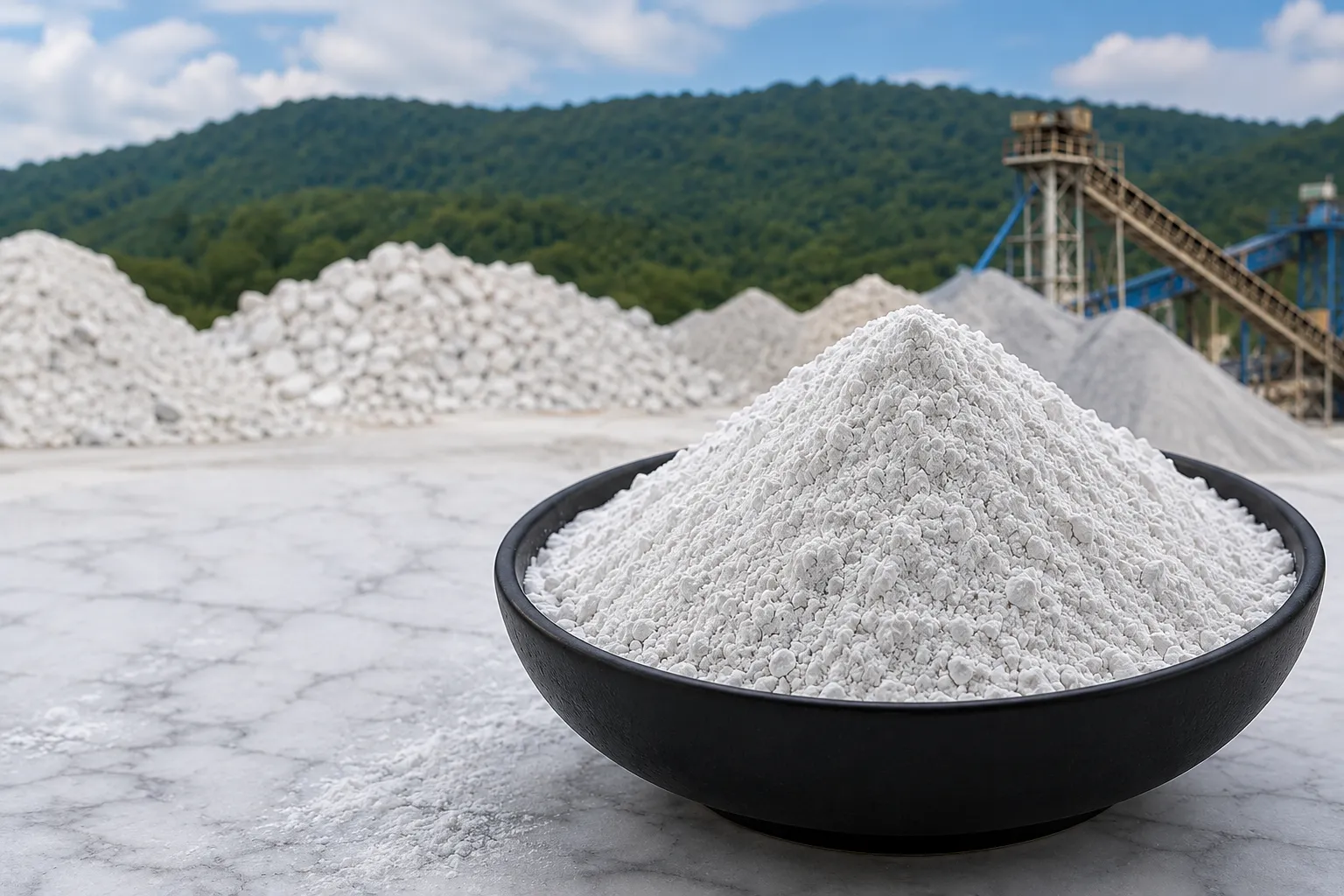
Everything starts at the quarry. A manufacturer pulling from a well-assessed, consistent quartz reserve is going to give you fewer surprises than one mining opportunistically and blending whatever comes up. High-purity quartz sand doesn’t happen by accident — it starts with knowing exactly what’s in the ground.
What happens after it's mined
Raw quartz sand isn’t ready to use straight out of the ground. It needs washing to get rid of clay and organic matter, screening to sort particle sizes properly, drying to hit a target moisture level, and grading so you’re not getting a mixed bag of mesh sizes. Manufacturers running older or partial processing setups tend to ship sand that reads fine on a spec sheet but behaves inconsistently once it’s actually in production.
How tightly they control quality
This is honestly where most of the gap between manufacturers shows up. Uniform grain size affects how the material flows and packs. Moisture that isn’t controlled throws off your weights and can cause clumping in storage. And batch consistency — backed by real lab testing, not a certificate from two years ago — is what tells you whether today’s shipment actually matches last month’s.
Comparing Manufacturers: What to Actually Look At
| Factor | Reliable Manufacturer | Low-Quality Supplier |
|---|---|---|
| SiO₂ Purity | Consistent, High | Varies Shipment to Shipment |
| Iron Content | Low, Verified | High, Unverified |
| Grain Size | Uniform | Mixed, Uneven |
| Moisture | Controlled | Unpredictable |
| Quality Testing | Every Batch | Occasional, If at All |
| Production Capacity | Large, Stable | Limited |
| Delivery | On Time | Delays Are Common |
What to Look for in a Silica Sand Supplier
A few things tend to separate the suppliers worth working with, in no particular order:
- Real experience, not just a well-designed website
- Actual manufacturing infrastructure — not a trading company relabeling someone else’s sand
- Processing technology that’s current, not manual sorting from a decade ago
- An in-house or accredited lab, so testing isn’t outsourced or skipped
- Certifications you can actually verify, not just claim
- Enough production capacity to handle your order without stretching thin
- Packaging flexibility — bags, bulk bags, loose bulk, whatever fits your logistics
- Coverage across India, not just one region
- Export documentation experience if you’re buying internationally
- A technical contact who’ll actually pick up the phone when something’s off-spec
Comparing Silica Sand Quality Across Manufacturers
Don’t take a brochure’s word for it. Ask for SiO₂ percentage, iron content, grain size distribution, and moisture readings from an actual lab report — not a generic spec sheet. Ask how consistent those numbers are across multiple batches, not just one good sample they sent you to close the deal. Check whether they offer grades built for your specific application, and pay attention to how quickly and clearly they respond when you ask a technical question. That last one tells you a lot about what happens after the order is placed.
Industries That Depend on High-Purity Silica Sand
- Glass manufacturing — clarity lives and dies on iron content
- Foundry work — grain shape and thermal stability affect casting quality directly
- Ceramics and tiles — inconsistent sand means inconsistent glaze and firing results
- Water filtration — filtration efficiency depends on uniform grain size
- Construction materials — gradation affects strength and workability
- Paints and coatings — fine, consistent particles change texture and finish
- Chemical industry — purity prevents reactions you don’t want
- Refractories — heat resistance comes down to mineral purity
What Buyers Should Actually Evaluate
Instead of trying to rank manufacturers by name, it’s more useful to know what questions to ask: Where’s the quartz sourced from? What processing technology are they actually running? Are the certifications verifiable? What’s their real production capacity, not their claimed one? Do they have export experience, and can they show it? Is there consistent, checkable customer feedback? Does batch-to-batch quality hold up? And when something goes wrong, is there a technical team that responds? Sigma Minerals has built its process around exactly these questions — sourcing from established quartz reserves and running full wash-screen-dry-grade processing with batch-level testing.
Why Industries Trust Sigma Minerals for High-Purity Silica Sand
Sigma Minerals has decades of mineral processing experience and access to strong quartz reserves, which is the foundation everything else is built on. That means high-purity silica sand run through modern washing and grading facilities, with quality testing that’s applied consistently rather than as a formality. Buyers get uniform particle size, bulk supply for large orders, delivery across India, export-ready packaging, and grades customized to specific industrial applications rather than a single generic product.
Conclusion
Quality isn’t a small detail in silica sand sourcing—it’s the foundation of consistent production, product performance, and long-term operational efficiency. Choosing the right Silica Sand Manufacturer can help reduce downtime, improve product quality, and ensure a reliable supply of high-purity silica sand. Before making a decision, evaluate the manufacturer’s purity standards, processing technology, quality testing practices, and delivery reliability. If you’re looking for a trusted Silica Sand Manufacturer that delivers consistently tested, high-quality silica sand for industrial applications, Sigma Minerals is ready to be your reliable supply partner.
Frequently Asked Questions
There's no single "right" purity number, it depends on what you're making. Construction and filtration can work with lower SiO₂, but glass manufacturing won't forgive anything below 99% with iron kept to a minimum. This walks through what to expect by application and how to actually read a lab report instead of trusting a spec sheet blindly.
Most buyers who regret a supplier chose on price and found out later the sourcing wasn't consistent. Before signing anything, check where their quartz actually comes from, whether they test every batch or just some of them, and whether their delivery track record holds up under a real order, not a sample shipment.
Glass needs it for clarity. Foundries need it for how it holds up under heat. Ceramics need it so the glaze fires evenly. Water filtration needs uniform grain size just to work properly. Each industry has its own reason, and knowing yours helps you ask for the right grade instead of a generic one.
People use these terms like they mean the same thing, and mostly that's fine, but not always. Washed Fhas already been through processing to strip out clay and organic matter. Quartz silica sand is the broader category based on mineral content. Worth knowing the difference before you write it into a purchase order
Even a tiny amount of iron oxide in your sand shows up as a tint you can actually see in the finished glass. That's the whole reason low-iron sand exists as its own category instead of just being "silica sand." Worth checking iron levels specifically before assuming a supplier's general purity claim covers it.
Yes, and the packaging and paperwork side is usually where export orders fall apart, not the sand itself. Sigma Minerals ships in bulk with export-ready packaging and the documentation support international buyers actually need, so shipments don't get held up over something avoidable.
Nobody asks about moisture until a shipment clumps in storage or the weight doesn't match what was ordered. Same with grain size, it seems minor until it starts affecting flow and packing on your line. Both are easy to check upfront and easy to regret ignoring. (
If a supplier's quality proof is a certification from months ago, that tells you nothing about the batch showing up this week. Ask for batch-level testing instead. It's a fair question, and how a manufacturer responds to it usually tells you more than the answer itself.
Not everyone calling themselves a manufacturer is actually processing the sand. Some are buying from someone else and putting their own label on it, which means less control over consistency and no real accountability when something's off. Worth asking directly before you assume.
Choosing on price without checking testing practices. Assuming "high purity" means the same thing across suppliers. Not asking for batch data before the first big order. These are the mistakes that show up months later as production problems, not at the time you make them.